CNC operator interview questions: sample answers for each one
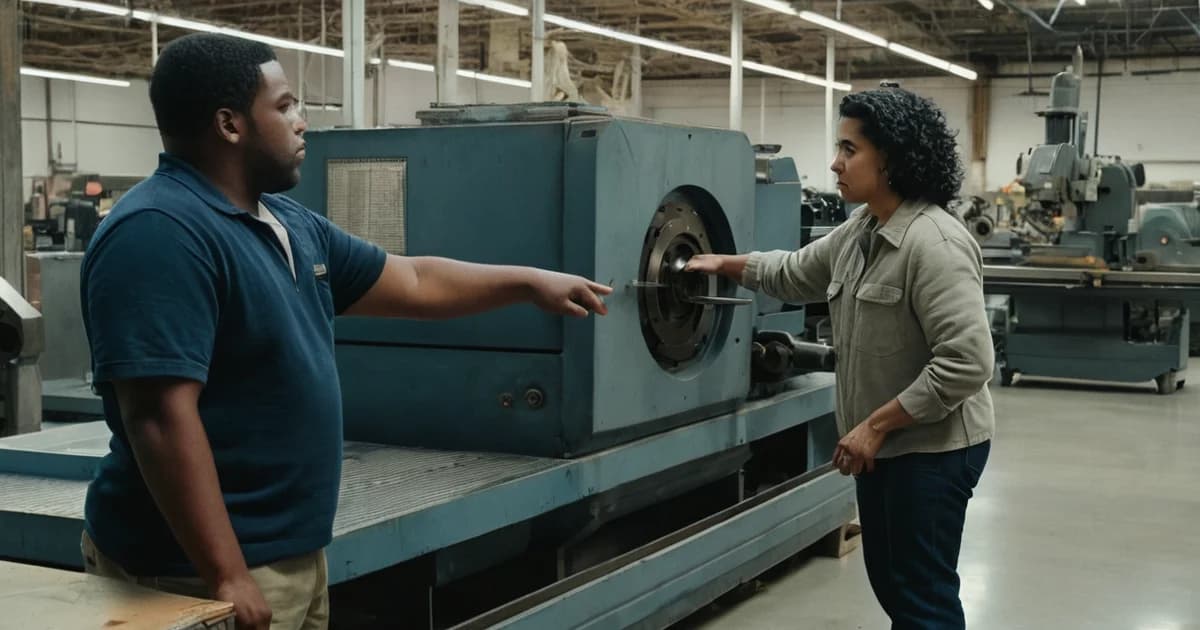
Prepare for questions about setting up and running a machine from a print, checking parts against specifications, what you do when a part drifts out mid-run, a past mistake, which machines and controls you have run, and safety. Answer each with a specific example from a real job: the steps you took, the gauge you used, and the result.
By I start Monday team · Published November 8, 2026 · 9 min read
A hiring manager interviewing a CNC operator may want to know three things. Can you read a print and run a machine without someone standing next to you? Will you catch a drifting dimension before it turns into a bin of scrap? Will you follow quality and safety procedures on a night when nobody is watching? Many questions are a small story in disguise, so a good way to prepare is to dig out real jobs you have run and remember the details: the part, the material, the tightest tolerance, the gauge, and what you did when something went wrong. If you want help with a common opening question, see how to answer tell me about yourself.
Walk me through how you set up a job from a print.
Why they ask: The BLS Occupational Outlook Handbook describes machinists and tool and die makers as setting up and operating equipment to produce precision metal parts, instruments, and tools. The manager is listening for an order of operations you repeat every time.
A strong answer: "I start with the print and setup sheet and confirm the revision matches the traveler. I check the material, load the tools from the tool list, and touch off each one. Then I set the work offset, run the program in single block with the rapid override turned down, and watch the first cut. I run one piece and measure every dimension on the print before I release the run."
A weak answer: "I load the program somebody gave me, hit cycle start, and see how it looks. If something is off, my lead usually tells me."
Fix it in one line: Say your steps in order out loud and finish with the first-piece check.
How do you check that your parts are in tolerance?
Why they ask: The BLS Occupational Outlook Handbook describes quality control inspectors as examining products and materials for defects or deviations from specifications. The manager wants to hear which gauges you have used, how often you check, and whether you write the results down.
A strong answer: "It depends on the feature. Calipers cover general dimensions, a micrometer covers tight outside diameters, and I use pin gauges or a bore gauge on holes. I follow the control plan for how often to check and I record each reading on the sheet. When a feature starts trending toward a limit, I adjust the offset before it goes out of tolerance."
A weak answer: "I use calipers on everything and eyeball the rest. If it looks right, it is probably right."
Fix it in one line: Match a named gauge to each kind of feature and mention how often you check and record.
A part comes out of tolerance in the middle of a run. What do you do?
Why they ask: This tests judgment under pressure. The manager wants to see that you stop, find the cause, contain suspect parts, and tell someone, even when the schedule is tight.
A strong answer: "I stop the machine and compare the last good part with the bad one to see how fast it drifted. Then I check the usual causes: tool wear, a loose fixture, chips under the part, or coolant and temperature changes. I fix the cause, adjust the offset if that is within my authority, and run a new first piece. I set aside every part since the last good check and tell my lead before I restart."
A weak answer: "I tweak the offset until it is back in and keep going. Nobody needs to hear about a few bad ones."
Fix it in one line: Say you contain the suspect parts and report the problem before you restart.
Tell me about a crash or a scrapped part and what you learned.
Why it comes up: This question gives you a chance to show honesty, how fast you reported the problem, and whether your habits changed afterward.
A strong answer: "Early on I ran a new program without single-blocking the first tool change, and the tool hit the vise. Nobody was hurt, and I told my supervisor right away so the spindle could be checked. Since then I verify tool length and work offset before every first run, keep the rapid override down, and compare the vise position to the setup sheet."
A weak answer: "I have never crashed a machine, I am careful. The one scrap batch I had was the programmer's fault because the program was bad."
Fix it in one line: Pick one real mistake, own it, and end on the habit it created.
What machines and controls have you run, and what are you comfortable doing on them?
Why they ask: The manager is matching your experience to the shop's equipment and finding the point where you need supervision, such as editing programs, setting offsets, or probing.
A strong answer: "Mostly three-axis vertical mills with Fanuc-style controls, plus a couple of lathes. I load programs, set work and tool offsets, change inserts, and make small edits like feed overrides when my lead approves them. I have not run a five-axis machine, but I have done the probing training and I am ready to learn your setup."
A weak answer: "I can run anything. The controls are all pretty much the same."
Fix it in one line: List machines, controls, and tasks by name, and admit one gap you are ready to close.
How do you stay safe at the machine?
Why they ask: Safety habits matter at the machine. A manager wants an operator whose habits hold up when nobody is watching.
A strong answer: "I wear the protective equipment the shop requires and keep sleeves and hair secured. I keep the door closed while the spindle runs. I follow the shop's lockout procedures for maintenance. If a guard or interlock is faulty, I tag the machine and tell my supervisor."
A weak answer: "I have done this a long time, so I know where my hands are. Guards slow you down sometimes."
Fix it in one line: Describe specific habits and say you would report a faulty guard.
CHECK YOUR STORY COUNT
Pick your five most recent jobs or part families. For each one, check whether you can state all three facts: the tightest tolerance, the inspection tool you used, and one thing you did when a dimension drifted. Count the jobs where you can state all three. A count of 3 or more out of 5 means you have enough real stories for every question above. A count of 2 or fewer means you should spend an evening pulling details from old setup sheets, prints, and inspection records before the interview.
| Question | What the interviewer is really asking | A strong answer in one line | A red flag |
|---|---|---|---|
| Walk me through a setup from a print | Do you follow a repeatable order before cutting? | Check revision, material, tools, offsets, single-block the first run, measure the first piece | Load the program and press cycle start |
| How do you check parts are in tolerance? | Do you match the gauge to the feature? | Name the gauge per feature, the check frequency, and where you record results | Eyeball it with calipers on everything |
| A part goes out of tolerance mid-run | Will you contain problems and speak up? | Stop, find the cause, quarantine suspect parts, tell the lead, rerun a first piece | Tweak the offset quietly and keep running |
| Tell me about a crash or scrap part | Do you own mistakes and change habits? | Describe one real error, report it fast, name the habit it created | Claim you have never made a mistake |
| What machines and controls have you run? | Where can you work without supervision? | List machines, controls, and tasks, then name one honest gap | Say you can run anything |
| How do you stay safe at the machine? | Will you follow safety rules unobserved? | Describe PPE, door, chip, and lockout habits, and report faulty guards | Treat guards as something that slows you down |
The night before
- Rehearse two setups out loud from a print you have run, using your own order of steps. The interview preparation checklist covers the rest of the logistics.
- Write your mistake story in four sentences: what happened, how you reported it, what it cost, and what you changed.
- Read the posting and note the machines, materials, and shifts it names, then match one of your jobs to each.
- Prepare a short opening answer and keep the interview cheat sheet handy for the logistics, clothing, and questions to ask.
- Ask the recruiter whether there is a shop tour or a hands-on print or measuring test, and wear closed-toe shoes in case there is.
Try it
Build a tailored resume and cover letter for the roles that match. Start on I start Monday
Frequently asked questions
What if I have no CNC experience?
Describe the nearest experience you have: manual mill or lathe work, reading prints, using calipers and micrometers, or any job with written procedures. Then say what you have done to learn, such as a class or practice programs.
Will I be asked to take a skills test?
It depends on the shop. Ask the recruiter in advance what to expect. If a test is offered, talk through your steps aloud so the evaluator hears your reasoning.
Should I bring anything to a CNC operator interview?
Bring a clean resume, a list of references, and copies of any certificates or training records. Photos or sample work are fine if your previous employer allows sharing them. Avoid bringing proprietary prints or programs. Ask the recruiter whether the visit includes a shop floor tour so you dress appropriately.
More on Skilled Trades
- HVAC Technician Interview Questions: Six to Practice and How to Answer Each One
- CNC operator cover letter: five steps with before and after examples
- Carpenter cover letter: build one in five steps, with a before and after